Welcome to the 2024 Year Ahead!
Opening Address of the 2024 Year Ahead
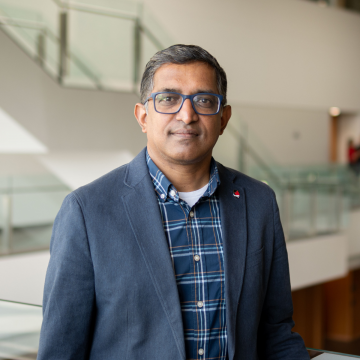
Dr. Yiagadeesen (Teddy) Samy is a Professor of international affairs at the Norman Paterson School of International Affairs (NPSIA) at Carleton University. He is currently in his second term as the Director of NPSIA, after serving a first term from 2017 to 2022. Prior to that, he served as Associate Director (MA program) from 2010 to 2016, and as Acting Associate Director (MA program) from 2008 to 2009. Since joining NPSIA in 2003, he has taught graduate courses in development economics, international trade, macroeconomics for developing countries, development assistance and quantitative methods. Professor Samy’s research interests intersect the broad areas of international and development economics, and his current research focuses on domestic resource mobilization, fragile states, foreign aid, deindustrialization and income inequality, and trade and women’s economic empowerment. He recently coedited a Handbook on Fragile States (Edward Elgar Publishing, 2023) and his latest co-authored book is Trade and Women’s Economic Empowerment: Evidence from Small and Medium-Sized Enterprises (Palgrave Macmillan, 2023).

Stopping the March to War: China and the West
09:30 -10:45
-

Dr. Stephen Saideman
Moderator
Stephen M. Saideman is the Paterson Chair in International Affairs at Carleton University. His research interests focus on the causes and consequences of intervention into intra-state conflicts. He has written books on the international relations of secession, why there were both more and less wars in Eastern Europe after the end of the Cold War, on NATO in Afghanistan, and on Canada’s Afghanistan experience. His current research focus is on the role of legislatures in democratic civil-military relations. He teaches courses on Contemporary International Security, Civil-Military Relations and US Foreign and Defence Policy. stevesaideman.com
-
Dr. Scott L. Kastner
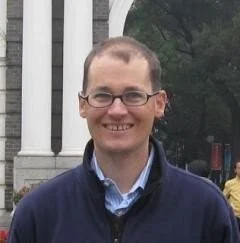
Scott L. Kastner is a Professor in the Department of Government and Politics, University of Maryland, College Park. He graduated from Cornell University (1995), and received his Ph.D. in Political Science from the University of California, San Diego (2003). Much of Kastner's research focuses on the international politics of East Asia, and he teaches classes on international relations, US-China relations, international political economy, and East Asia. He is author of War and Peace in the Taiwan Strait (Columbia University Press, 2022), China’s Strategic Multilateralism: Investing in Global Governance (with Margaret Pearson and Chad Rector, Cambridge University Press, 2019) and Political Conflict and Economic Interdependence across the Taiwan Strait and Beyond (Stanford University Press, 2009). His work has also appeared in journals such as International Security, Journal of Conflict Resolution, International Studies Quarterly, Comparative Political Studies, Security Studies, and Journal of Contemporary China.
-
Meia Nouwens
Meia Nouwens is Senior Fellow for Chinese Security and Defence Policy with the International Institute for Strategic Studies and a frequent commentator on China and Asian regional politics in the media. She has provided testimony to the House of Commons and House of Lords, as well as US Congress on Chinese defence policy and military modernisation. Her specialism lies in Chinese security and defence policy, cross-service military modernisation and Chinese defence-related industry and innovation. Earlier in her career, she served as a European diplomat in Taipei and Wellington, and also has experience working on foreign policy, defence and security in the private sector. She is a Mandarin speaker, and has studied at Macquarie University in Sydney with a BA (Hons), Leiden University with an MA and the University of Oxford in conjunction with Peking University for an MPhil in Modern Chinese Studies.
-
Dr. Pascale Massot
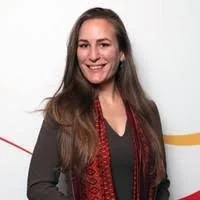
Pascale Massot is an Assistant Professor at the University of Ottawa’s School of Political Studies. She was a member and adviser to the Co-chairs of the Canadian Minister of Foreign Affairs’ Indo-Pacific Advisory Committee, which advised the Minister on Canada’s recently published Indo-Pacific Strategy. She served as the Senior Advisor responsible for Asia and China in the office of various Canadian Cabinet ministers, including the Minister of Foreign Affairs and the Minister of International Trade, at different points between 2015 and 2021. Her research focuses on the global political economy of China’s rise, China’s impact on global commodity markets, Canadian foreign policy on China and Canadian public opinion on these matters. Pascale Massot has a Ph.D. in political science from the University of British Columbia. Her book, China's Vulnerability Paradox: How the world's largest consumer transformed global commodity markets is coming out with Oxford University Press in early 2024.
Evacuations: Lessons from Afghanistan, Sudan and Beyond
11:00 -12:00
-
Dr. Lama Mourad
Moderator
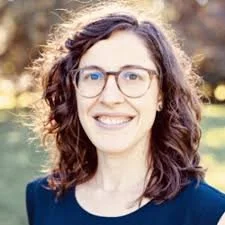
Lama Mourad is an Assistant Professor at the Norman Paterson School of International Affairs at Carleton University. Her research interests are focused on the intersection of forced migration, local governance, and the politics of borders, with a regional focus on the Middle East. Professor Mourad previously held fellowships at Perry World House, University of Pennsylvania, and with the Middle East Initiative at the Harvard Kennedy School of Government. Her research has been supported by a number of institutions and agencies, including the Harvard Kennedy School’s Middle East Initiative, the Social Sciences and Humanities Research Council, and the International Development Research Centre (IDRC). Her work has been published in both academic and public outlets, including the Journal of Refugee Studies, Middle East Law and Governance, Forced Migration Studies, the European Journal of International Relations as well as The Atlantic, Lawfare, The Washington Post’s Monkey Cage, and The Toronto Star.
-

Dr. Stephanie Carvin
Stephanie Carvin is an Associate Professor of International Relations at the Norman Paterson School of International Affairs. Her research interests are in the area of national security and international security and international law. Currently, she is teaching in the areas of critical infrastructure protection and national security. Stephanie holds a PhD from the London School of Economics and published her thesis as Prisoners of America’s Wars: From the Early Republic to Guantanamo (Columbia/Hurst, 2010). Her most recent book is Stand on Guard: Reassessing Threats to Canada’s National Security (University of Toronto Press, 2021) which was nominated for the 2021 Donner Prize. She is the co-author of Intelligence and Policy Making: The Canadian Experience (Stanford University Press 2021) with Thomas Juneau, and Science, Law, Liberalism and the American Way of Warfare: The Quest for Humanity in Conflict (Cambridge, 2015) co-authored with Michael J. Williams. From 2012-2015, she was an analyst with the Government of Canada focusing on national security issues.
-
Dr. Nisrin Elamin
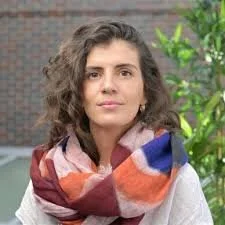
My work investigates the connections between land, race, belonging and empire-making in Sudan and the broader Sahel region. I use land and struggles over land as a lens through which to examine state surveillance of Sahelian migration as well as Gulf Arab corporate investments and political interventions in Sudan and neighboring countries. I am currently working on a book project based on 15 months of ethnographic fieldwork in central Sudan, where I conducted research in local courts, farming communities, investor conferences, agribusiness farms, government ministries, and in the zawiyas of Sufi religious leaders mediating land disputes in the aftermath of large-scale land enclosures. The book examines the ways landless and landholding communities are negotiating and contesting changes in land ownership prompted by a recent wave of domestic and Gulf Arab corporate investments in Sudanese land. It situates contemporary, state-driven ‘land grabs’ in the agricultural Gezira region of central Sudan, within a layered history of enclosures and unequal landed relations shaped by legacies of enslavement and colonial rule. Methodologically, it combines a multi-sited ethnographic study of gendered and racialized forms of land dispossession with a historical analysis of ways the Gezira has been imagined as the answer to various colonial and post-colonial development visions and empire-making projects. Before pursuing a PhD, I spent over a decade working as an educator, researcher and organizer in the US and taught for several years in Tanzania. Prior to joining the University of Toronto, I taught at Bryn Mawr College and was a Postdoctoral Fellow in the Society of Fellows at Columbia University in the United States

Dangers to Canada from the 2024 American Election Process
13:30 - 14:15
-

Artur Wilczynski
Moderator
Artur Wilczynski is the Associate Deputy Chief of Signals Intelligence at the Communications Security Establishment. He holds a Master’s in International Affairs from the Norman Paterson School of International Affairs at Carleton University. Previously, he worked as Ambassador at the Embassy of Canada to Norway from 2014-2018 and was a Director General at Public Safety and the Department of Foreign Affairs, Trade and Development.
-
Dr. Ryan Scrivens
Ryan Scrivens is an Assistant Professor in the School of Criminal Justice at Michigan State University. He is also an Associate Director at the International CyberCrime Research Centre at Simon Fraser University and a Research Fellow at the VOX-Pol Network of Excellence. Ryan conducts problem-oriented interdisciplinary research with a focus on terrorists’ and extremists' use of the Internet, right-wing terrorism and extremism, and hate crime. He has published over 40 peer-reviewed journal articles, books and book chapters, conference proceedings, and policy notes in the past five years. His recent work appears in Terrorism and Political Violence, Studies in Conflict & Terrorism, Social Media + Society, and Criminal Justice Policy Review. He is also co-editor of Right-Wing Extremism in Canada and the United States (Palgrave, 2022) and Former Extremists: Preventing and Countering Violence (Oxford University Press, forthcoming 2023). Ryan has presented his findings before practitioners and policymakers at the Federal Bureau of Investigation, the Department of Defense, the Department of Homeland Security, the UK Home Office, the United Nations, and the European Commission, among many others. His research has been funded by Public Safety Canada, the Canadian Network for Research on Terrorism, Security and Society, and VOX-Pol. He received the 2022 Early Career Impact Award from the American Society of Criminology Division on Terrorism and Bias Crimes.
-
Dr. Amy Cooter
Amy Cooter is the Director of Research, Academic Development, and Innovation (RADI) at CTEC who focuses on antigovernment extremism. She has studied a range of groups who use a nostalgic understanding of the past to justify their actions. Her primary expertise is on U.S. domestic militias, and groups of armed individuals who see it as their civic duty to uphold the Constitution the way they believe it should be interpreted. Amy has testified before U.S. Congress about her research, and regularly consults with academics, journalists, and law enforcement around the globe. You may find her quoted in such outlets as NPR, Rolling Stone, FiveThirtyEight, and The Washington Post. Amy has a Ph.D. in sociology from the University of Michigan and B.A. in sociology and psychology from Vanderbilt University.
-
Dr. Amarnath Amarasingam
Amarnath Amarasingam is an Assistant Professor in the School of Religion, and is cross-appointed to the Department of Political Studies, at Queen’s University in Ontario, Canada. His research interests are in terrorism, radicalization and extremism, conspiracy theories, online communities, diaspora politics, post-war reconstruction, and the sociology of religion. He is the author of Pain, Pride, and Politics: Sri Lankan Tamil Activism in Canada (2015), and the co-editor of Stress Tested: The COVID-19 Pandemic and Canadian National Security (2021) and Sri Lanka: The Struggle for Peace in the Aftermath of War (2016). He has also published over 60 peer-reviewed articles and book chapters, has presented papers at over 100 national and international conferences, and has written for The New York Times, The Monkey Case, The Washington Post, CNN, Politico, The Atlantic, and Foreign Affairs. He has been interviewed on CNN, PBS Newshour, CBC, BBC, and a variety of other media outlets. He tweets at @AmarAmarasingam

The Balkans: An Unwatched Pot Boiling Over?
14:30 - 15:45
-
Colonel Marie-Christine Harvey
Moderator
Colonel Marie-Christine Harvey joined the Canadian Armed Forces in 1996, initially as a reservist and non commissioned member in the Régiment du Saguenay. In 1997, she was commissioned in the Royal Canadian Artillery and completed her bachelor's degree at the Royal Military College of Canada in 2001. After her studies and basic military training, she began her career with the 5th Light Artillery Regiment of Canada (5 RALC). She occupied all command positions there culminating in command of the unit from 2017 to 2019. Her transfers outside the unit included the Headquarters of the 5th Canadian Mechanized Brigade Group, the Combat Training Center, the Canadian Army Headquarters and the office of an Assistant Deputy Minister. She completed several command courses as well as academic training including a master's degree from the Australian National University obtained during her course at the Command and Staff College in Canberra, Australia. In 2019, she was promoted to her current rank of Colonel in 2019, she has since held the Canadian Army G3 position (Director of Operations) and assumed command of the 5th Canadian Mechanized Brigade Group from 2021-2023. Her operational experiences include several domestic operations (floods, forest fires, G7, ice storms, etc.) and international deployments on Op Palladium (Bosnia), Op Athena (Afghanistan) and Op Impact (Kuwait-Iraq). She is married and mother of two children
-
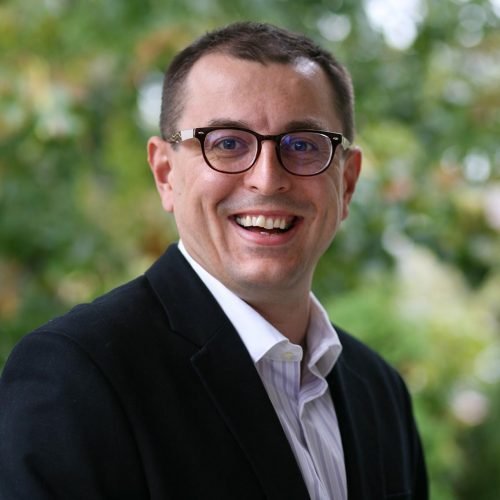
Dr. Srdjan Vucetic
Srdjan Vucetic is an associate professor at the Graduate School of Public and International Affairs and Co-Director (Security) in the Canadian Defence and Security Network (CDSN-RCDS). Before joining the School, Srdjan was Randall Dillard Research Fellow in International Studies at Pembroke College at the University of Cambridge, Senior Visiting Fellow at Asia Research Institute, National University of Singapore, and Senior Visiting Fellow at Institute for Defense and Security Analysis, New Delhi. His work has been published in several academic journals, including Canadian Journal of Political Science / Revue canadienne de science politique, European Journal of International Relations, Foreign Policy Analysis, International Organization, Review of International Studies and The British Journal of Politics and International Relations. He is the author of The Anglosphere: A Genealogy of a Racialized Identity in International Relations (Stanford University Press, 2011) and Greatness and Decline: National Identity and British Foreign Policy (McGill-Queen’s University Press, 2021), and co-editor of Canadian Defence Policy in Theory and Practice (Palgrave 2020).
-
Dr. Jasmin Mujanović
Jasmin Mujanović is a Political Scientist (Ph.D., York University) specializing in the politics of post-authoritarian and post-conflict democratization. He is the author of two books, Hunger and Fury: The Crisis of Democracy in the Balkans (Hurst Publishers & Oxford University Press, 2018), and The Bosniaks: Nationhood After Genocide(Hurst Publishers & Oxford University Press, December 2023). His publications also include a host of peer-reviewed articles, chapters in numerous edited volumes, policy reports for an assortment of international and regional think tanks, as well as popular analyses in the New York Times, the Washington Post, Foreign Affairs, Foreign Policy, and other leading global media. He has a prominent social media presence and makes regular appearances for international television and radio programs including numerous Balkan media outlets. Originally from Sarajevo, he is currently an Advisory Board member of the Kulin Initiative and the Nationhood Lab at the Pell Center at Salve Regina University
-
Dr. Sidita Kushi
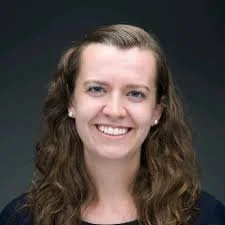
Sidita Kushi is an Assistant Professor of Political Science at Bridgewater State University and a Non-Residential Fellow at the Center for Strategic Studies (CSS) at the Fletcher School of Law and Diplomacy, Tufts University. She has served as a research director at the Center for Strategic Studies, where she led the Military Intervention Project (MIP). She is the author of Dying by the Sword: The Militarization of U.S. Foreign Policy (2023, Oxford University Press), the forthcoming book From Kosovo to Darfur: Why Military Humanitarianism Favors the West (University of Michigan Press), and academic articles on military interventions, intrastate conflict, and the gendered dynamics of economic crises, published in The Journal of Conflict Resolution, International Relations, Comparative European Politics, European Security, World Affairs, International Labour Review, Mediterranean Quarterly, amongst others. Sidita also contributes to public scholarship on the Western Balkans, US foreign policy, and transatlantic security within outlets such as Foreign Affairs, The Washington Post, MSNBC, Newsweek, and more. Sidita holds a Ph.D. in Political Science from Northeastern University (2018), an M.A. in Political Science/Economics from Northeastern University (2013), and a B.A. in Economics and International Studies from St. John Fisher University (2010)